Termite Control
Signs of Termites in Fort Lauderdale Homes: What to Look For
By A&A Total Pest Solutions
A small pile of wings beside a window. A line of dirt running up the foundation. A section of wood that sounds strangely hollow. These details are easy to overlook, especially in a busy South Florida household. But they can also be signs that termites are active somewhere in or around a property.
For homeowners in Fort Lauderdale, Hollywood, Plantation, and nearby Broward County communities, early termite identification matters because damage may develop out of sight. The right next step is not to guess which product to use. It is to find out whether termites are present, which kind they are, and where activity is occurring.
Quick answer: What are the first signs of termites in a Florida home?
Common warning signs include mud tubes on foundations, discarded insect wings near windows or doors, tiny drywood termite pellets, hollow-sounding or damaged wood, and visible swarming insects. No single clue confirms every infestation. A professional inspection helps distinguish termites from ants, moisture damage, and other wood-damaging problems.
1. Mud tubes along foundations or walls
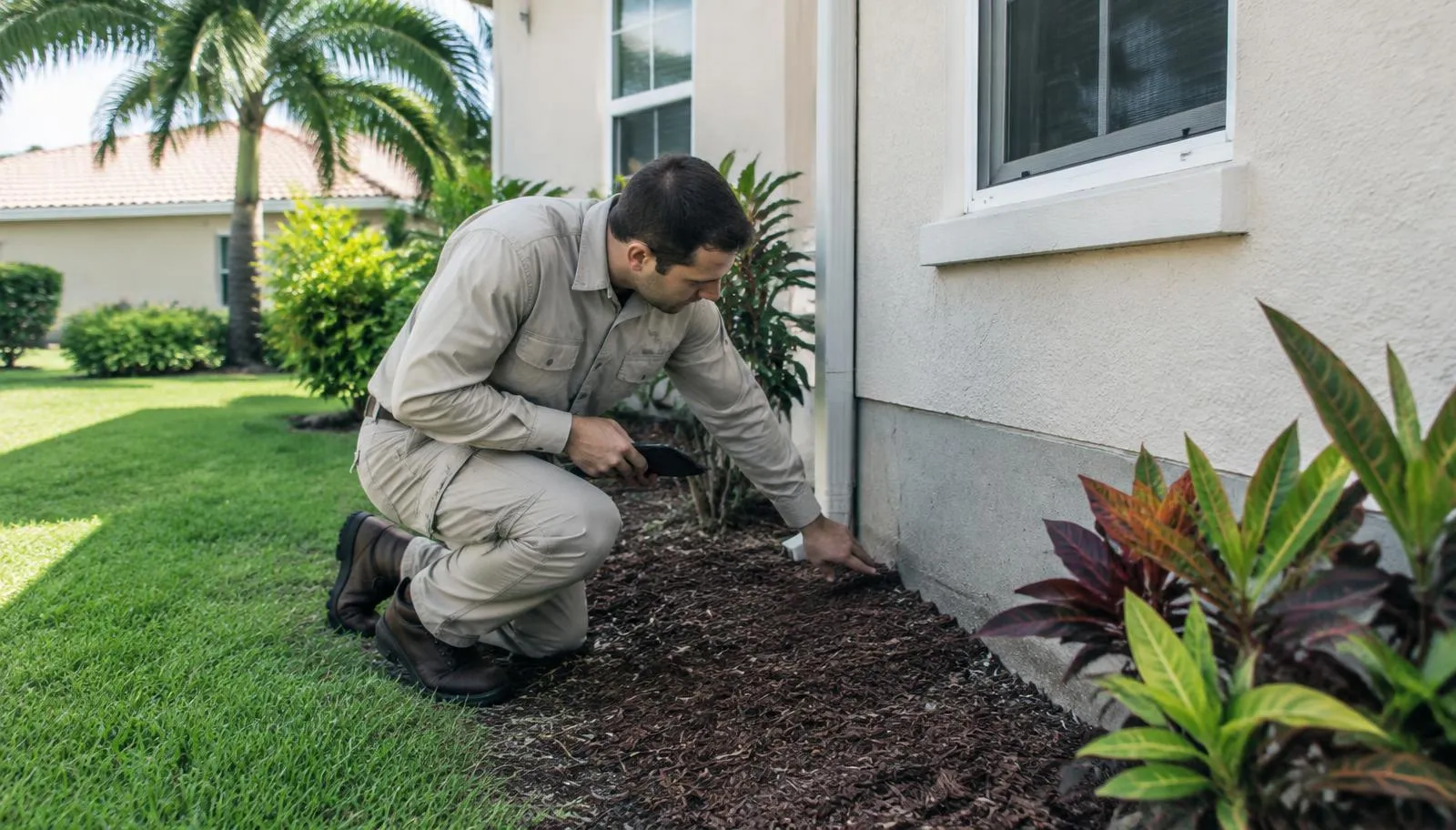
Subterranean termites often travel between soil and wood through narrow, protected mud tubes. Homeowners might notice them on a concrete foundation, garage wall, or near plumbing penetrations. These tubes may look like irregular dried-mud lines and can be hidden behind landscaping or stored items.
A tube is a reason to investigate, even if you do not see live insects. Avoid assuming that breaking it or spraying its surface has solved the issue. The colony may be active somewhere else, and the route may be rebuilt.
Where to look: around the foundation, utility lines entering the structure, garage edges, and accessible exterior walls. Do not pull apart walls or enter unsafe crawl spaces to search for termites yourself.
2. Discarded wings around doors, windows, or lights
Winged termites leave established colonies to reproduce. After a swarm, you may find loose wings on windowsills, near lights, or by a door. Flying ants can look similar, so an accurate identification is important.
Termite swarmers generally have a broad waist and two pairs of wings of similar length. Flying ants commonly have a narrow waist and differently sized front and rear wings. Those characteristics can be difficult to evaluate without a close-up view or a sample.
Is October termite season in South Florida? Termite colonies can remain active year-round in Florida, but different species swarm at different times. Many well-known subterranean termite flights peak in spring, while some drywood or other species may swarm at other points in the year. You should not dismiss suspicious signs simply because you noticed them outside the spring season.
3. Tiny pellets below trim, furniture, or woodwork
Drywood termites can leave hard, grain-like fecal pellets, often called frass, near small openings in infested wood. A recurring pile under a wood window frame, baseboard, door trim, or piece of furniture warrants closer attention.
Not every grain-like pile is termite evidence. Wood dust, household debris, and other insects can look similar. Photograph the area and note whether fresh material appears after it is carefully cleaned. That history can help an inspector locate the source.
4. Wood that looks normal outside but feels damaged inside
Termites may feed within wood while leaving the visible surface partly intact. Warning signs can include blistered-looking trim, sections that sound hollow when gently tapped, small openings, or crumbling wood. Floors or door frames can also change because of moisture or ordinary building movement, so these symptoms are not proof by themselves.
If you suspect structural damage, avoid probing or removing load-bearing materials. Have a qualified professional evaluate the pest issue, and use an appropriate building professional when the integrity of the structure is in question.
5. Moisture and wood-to-ground contact around the property
Moisture does not automatically mean termites are present, but certain conditions increase vulnerability, especially for subterranean termites. Look for persistent leaks, poorly draining areas, irrigation that repeatedly wets the structure, and wood touching soil. Mulch piled against siding or storage that blocks foundation visibility can make monitoring harder.
A basic prevention checklist is useful even before an inspection:
- Repair leaks and improve drainage where practical.
- Keep wood debris and stored lumber away from the building.
- Limit wood-to-soil contact where possible.
- Avoid burying inspection areas beneath dense mulch or stored belongings.
- Schedule an inspection when you see suspicious activity, rather than relying on a seasonal reminder.
These steps help address conditions that termites may exploit; they do not replace treatment for an active colony.
What happens during a professional termite inspection?
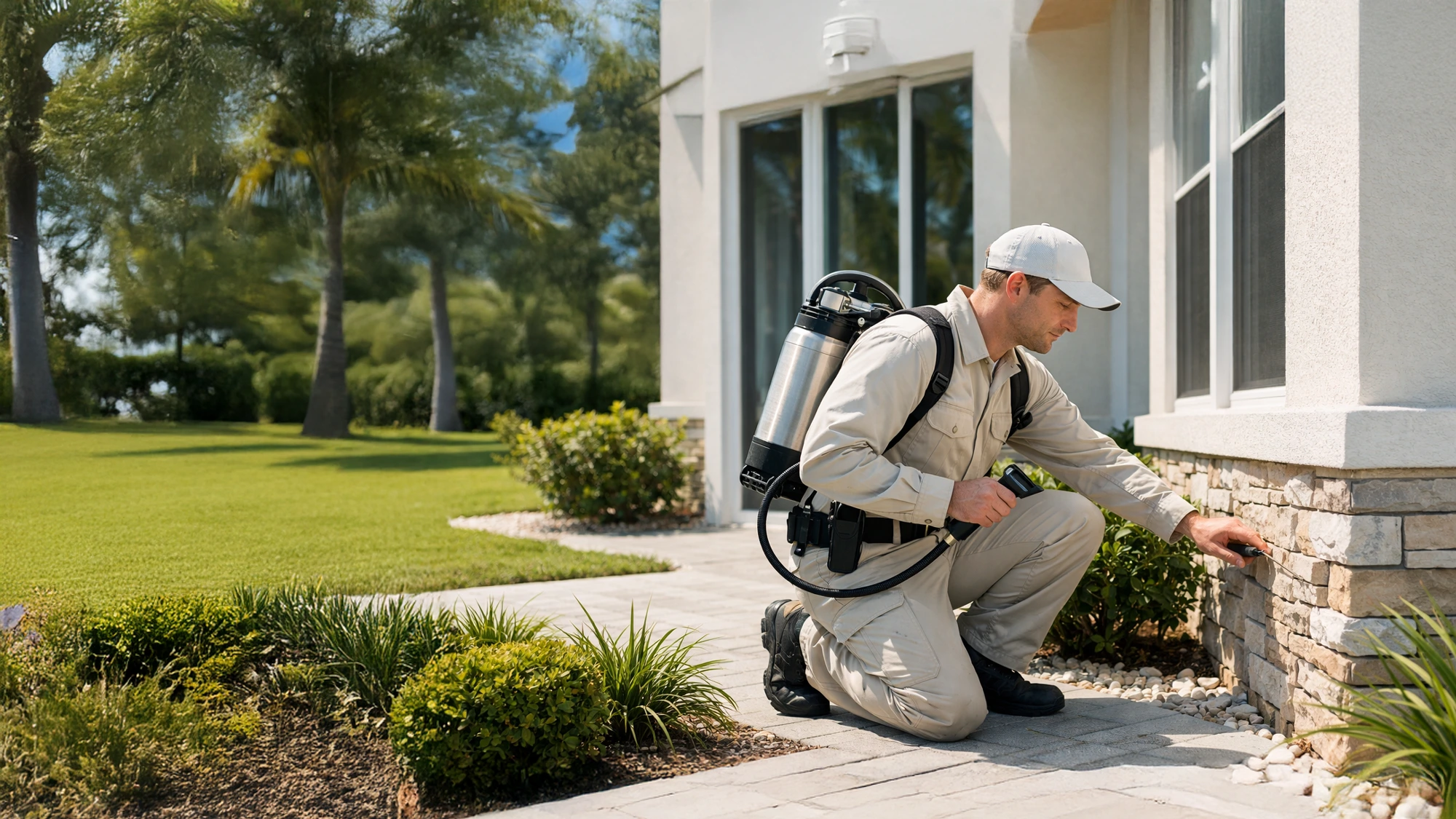
A termite inspection should begin with evidence. The technician examines accessible risk areas, checks for signs such as tubes or frass, considers moisture and structural conditions, and works to identify the termite type. That identification matters because drywood and subterranean termites have different nesting habits and treatment needs.
A&A Total Pest Solutions offers termite inspection and termite control for South Florida homes and businesses. Its inspection-led approach focuses on identifying activity and property conditions before recommending a treatment plan. Property-specific recommendations may include targeted treatment, prevention measures, and monitoring as appropriate to the findings.
Ask the inspector what evidence was found, whether the activity appears current, which areas were accessible, what treatment is being recommended, and what follow-up should look like. Those questions make it easier to understand the plan instead of paying for an unexplained application.
Frequently asked questions about termites in South Florida
Can termites damage a house without being visible?
Yes. Termites may be active inside wood, behind walls, or in hidden pathways long before obvious signs appear. A visual check by the homeowner cannot confirm that a property is termite-free.
Are termite wings always evidence of an active infestation inside my home?
Not necessarily. Winged termites may fly in from outside, or they may emerge from a colony in the structure. A trained inspection can help determine the likely source and risk.
Should I spray a mud tube myself?
Do not depend on spraying the visible tube as a solution. The underlying colony and its access routes need to be identified so that treatment is appropriate for the termite species and location.
Do Florida homeowners need termite inspections outside spring?
Yes, inspections can be useful any time signs appear. Termites remain active in Florida even when a particular species is not swarming.
Does moisture damage mean I have termites?
No. Moisture can damage wood on its own and can also create favorable conditions for certain termites. Inspection helps distinguish one problem from another.
Helpful resources
Protect Your Fort Lauderdale Property With a Termite Inspection
If you have noticed wings, mud tubes, unexplained pellets, or suspicious wood damage, do not wait for the symptoms to become obvious. A&A Total Pest Solutions provides termite inspections and termite control in Fort Lauderdale and across Broward, Palm Beach, and Miami-Dade counties — see our full service area. Request a service or call 954-393-4088 to discuss what you have found and schedule an assessment.