Common Spiders in Florida
South Florida's warm, humid climate makes it a comfortable home for a wide range of spiders. Most species you'll run into in Broward, Palm Beach, and Miami-Dade are harmless and even helpful — they eat mosquitoes, roaches, and other nuisance pests. A small number can bite and cause a reaction, so knowing what you're looking at matters. Below is a plain-language guide to the spiders you're most likely to see around a Florida home, how to tell them apart, and what to do if you find one.
Black Widow (Latrodectus mactans / Latrodectus geometricus)
Two black widow species live in Florida: the shiny black southern black widow with its bright red hourglass, and the tan-to-brown brown widow with an orange or yellow hourglass. Both prefer quiet, undisturbed places — garage corners, patio furniture, meter boxes, grills, outdoor storage, woodpiles, and the underside of pool equipment.
How to identify: globe-shaped abdomen, distinct hourglass marking on the underside, tangled and irregular web, often close to the ground. Egg sacs are round and papery.
Bite risk: venomous. A bite can cause muscle pain, cramping, nausea, and sweating. Seek medical attention, especially for children, older adults, and anyone with a heart condition.
Brown Recluse (Loxosceles reclusa)
The brown recluse is often blamed for bites in Florida but is not native and is rare here. Most "brown recluse" sightings turn out to be a different brown spider — commonly a wolf spider, huntsman, or southern house spider. That said, occasional individuals do show up in South Florida via shipments or moves from other states.
How to identify: uniform tan-to-brown body, a darker violin-shaped mark on the head area, and — most reliably — only six eyes arranged in three pairs. Legs are long and thin without banding or dark spots.
Bite risk: venomous. Bites can develop into a slow-healing wound. If you suspect a bite, take a photo of the spider if possible and see a doctor.
Wolf Spider (Family Lycosidae)
Wolf spiders are one of the most common spiders people find inside Florida homes. They're fast, hairy, and can look intimidating, but they're not aggressive and rarely bite unless handled. They don't build webs — they hunt on the ground and often follow prey indoors during heavy rain.
How to identify: brown or gray body with stripes, thick legs, large forward-facing eyes that reflect flashlight beams, and females often carry a large egg sac attached to the abdomen or spiderlings on the back.
Bite risk: low. A bite may cause a small welt similar to a bee sting.
Huntsman Spider (Heteropoda venatoria)
Huntsman spiders are large, flat, and fast — often mistaken for tarantulas. They favor garages, sheds, and the outside walls of homes where they hunt roaches and other pests at night. Homeowners in Fort Lauderdale, Hollywood, and Miami frequently run into these behind pictures, curtains, and behind exterior door frames.
How to identify: body up to 1 inch, leg span up to 5 inches, flat profile that lets it slip under thin gaps, brownish body with subtle banding.
Bite risk: low. They prefer to run rather than bite.
Golden Silk Orb Weaver ("Banana Spider")
The banana spider builds huge golden-yellow webs across walkways, patios, and between trees. They look alarming but are mostly a nuisance rather than a health threat. Females can be several inches across including the legs.
Bite risk: low. Bites are uncommon and usually mild.
Jumping Spider (Family Salticidae)
Small, curious, often colorful spiders that hop across walls, window sills, and railings. They have excellent eyesight and will often turn to look at you.
Bite risk: very low. Considered beneficial.
When to Worry About a Spider Bite
Most bites in South Florida come from something other than a spider. If you have an actual confirmed spider bite, watch for spreading redness, severe muscle cramping, sweating, fever, or a wound that darkens or opens up over the next 24–48 hours. Seek medical care right away in those cases, and bring a photo of the spider if you have one.
How to Reduce Spider Activity Around Your Home
- Keep exterior lights off or use yellow "bug" bulbs — bright white lights attract the insects spiders eat.
- Seal gaps around doors, windows, and utility penetrations.
- Move woodpiles, mulch, and stored items away from the foundation.
- Knock down webs regularly around eaves, patios, and outdoor lights.
- Reduce clutter in garages, sheds, and storage rooms — spiders love undisturbed corners.
- Treat the underlying pest problem. Fewer roaches, ants, and mosquitoes means fewer spiders.
When to Call a South Florida Pest Control Professional
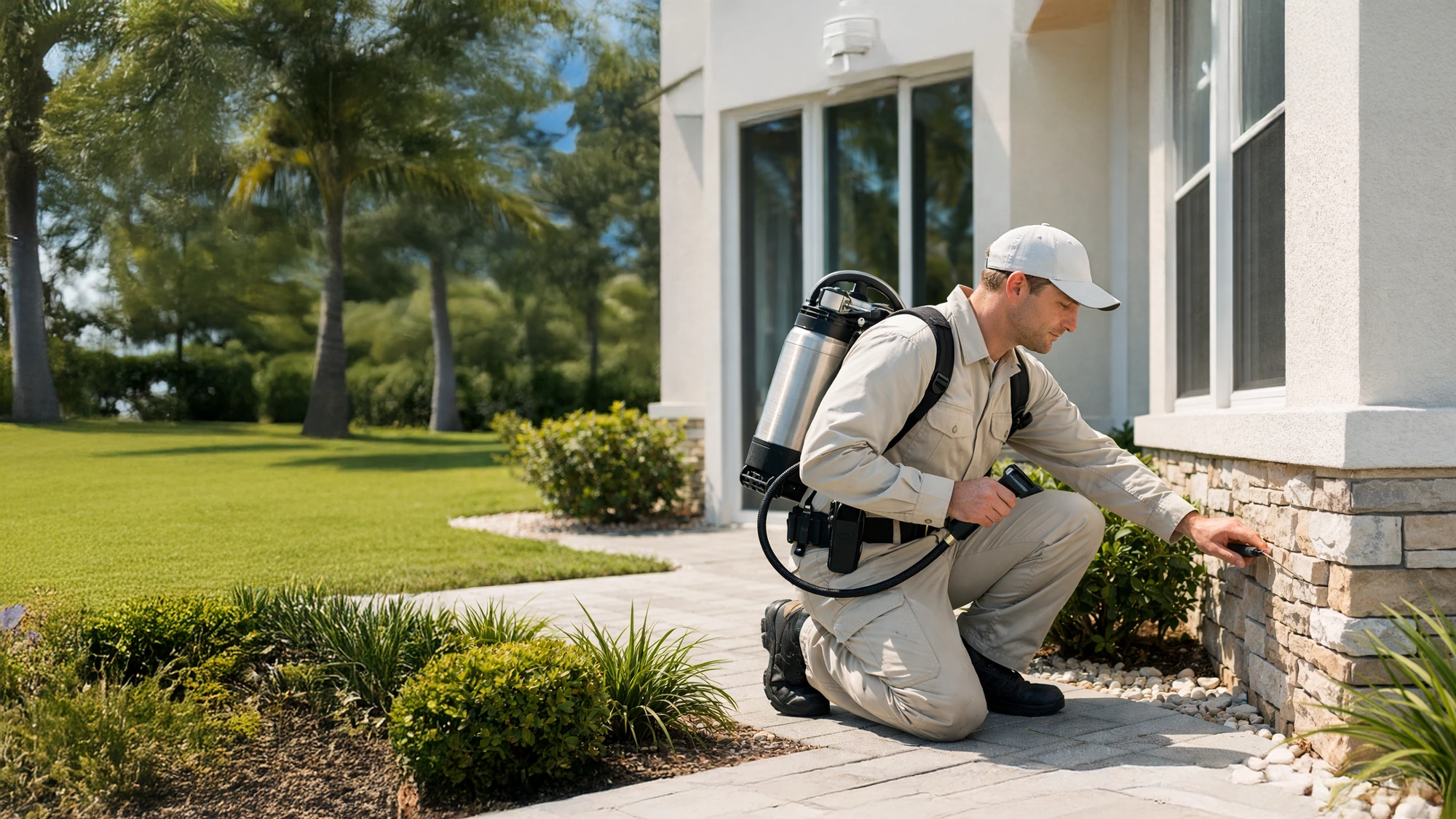
Call in a professional when you're finding widow spiders around a play area or garage, when webs keep coming back on the exterior of the home, when you suspect a bite, or when spiders are showing up indoors regularly. A&A Total Pest Solutions provides pest control across Broward, Palm Beach, and Miami-Dade, including targeted exterior perimeter treatments that reduce both spiders and the insects they feed on.
Ready to get spiders under control? Contact A&A Total Pest Solutions to schedule an inspection or service in South Florida.